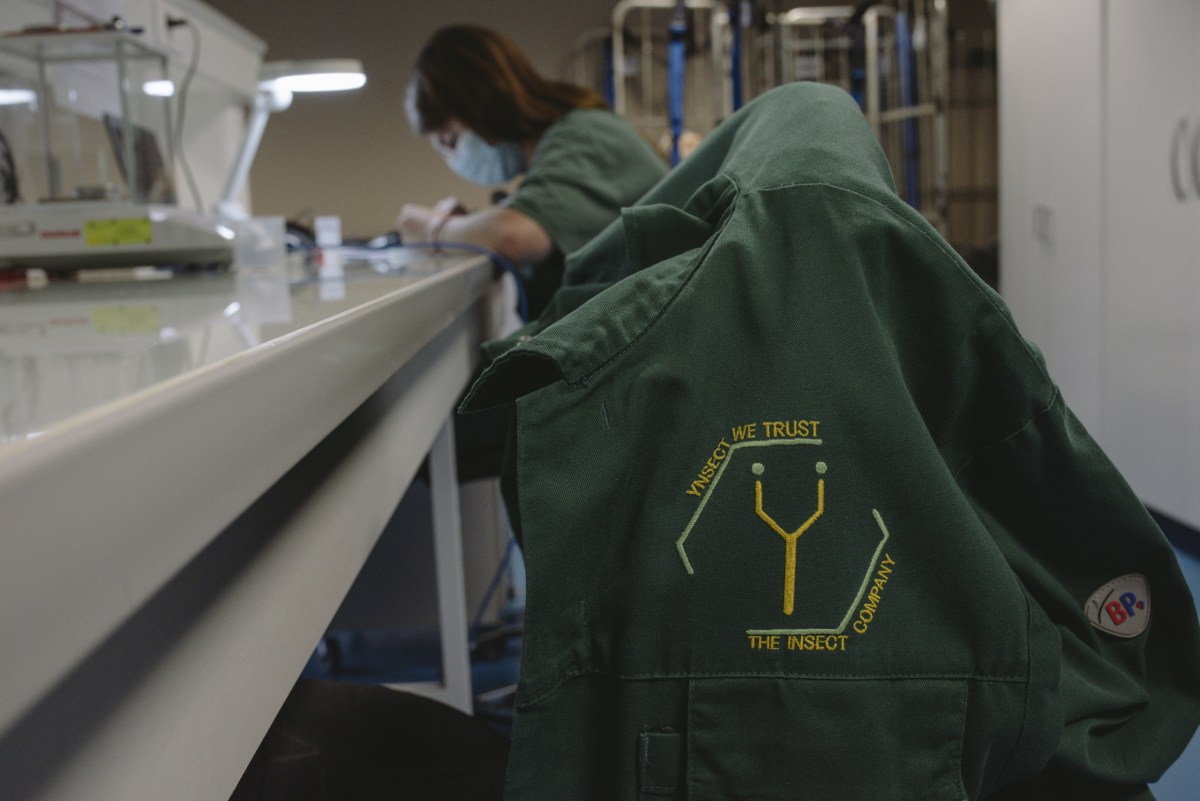
Ÿnsect, a French startup specializing in insect farming, gained significant attention when actor Robert Downey Jr. endorsed the company on the “Late Show” during Super Bowl weekend in 2021. However, nearly four years later, Ÿnsect has entered judicial liquidation, a form of bankruptcy, highlighting the challenges faced by startups in emerging markets.
The company raised over $600 million from various investors, including Downey Jr.’s FootPrint Coalition and public funds, yet it struggled to achieve its ambitious goal of revolutionizing the food supply chain through insect-based protein. While many might attribute its failure to the negative perception of insects in Western diets, the reality is more complex. Ÿnsect’s primary focus was not on human food but rather on producing insect protein for animal feed and pet food, sectors characterized by distinct economic dynamics.
Ÿnsect’s indecision regarding its market focus contributed to its downfall. In 2021, the company acquired Protifarm, a Dutch firm specializing in mealworms for human consumption, thereby expanding into a third market segment. Despite this acquisition, then-CEO Antoine Hubert acknowledged that human food would only account for a small portion of revenue in the near term. He stated, “We still see pet food and fish feed being the largest contributor to our revenues in the coming years.” This strategic choice to diversify without a clear focus on profitability hurt the company’s financial stability.
Revenue figures further illustrate Ÿnsect’s struggles. The company’s revenue peaked at €17.8 million (approximately $21 million) in 2021, a figure that was reportedly inflated due to internal transfers among subsidiaries. By 2023, Ÿnsect faced a net loss of €79.7 million (around $94 million), raising questions about its financial management and operational efficiency.
Despite the significant capital raised, Ÿnsect’s challenges stemmed from a mismatch between its sustainability vision and market realities. The animal feed industry is largely driven by price competition rather than sustainability premiums, making it difficult for insect protein to gain traction. While the ideal scenario involves a circular economy where insects are fed on food waste, in practice, large-scale insect farming often relies on cereal by-products that could be used as animal feed, effectively complicating the economic viability of the model.
In contrast, the pet food market presents a more favorable landscape for insect protein, as it is less price-sensitive and offers better margins. By 2023, Ÿnsect attempted to pivot its strategy towards pet food and other higher-margin segments, driven by broader economic pressures such as rising energy costs and inflation. Hubert noted, “In an environment where there is inflation on energy and raw materials but also on the cost of capital and debt, we cannot afford to invest loads of resources in markets which are the least remunerative (animal feed), while you have other markets where there is a lot of demand, good returns and higher margins.”
However, this strategic pivot came too late. Ÿnsect had already committed to the construction of Ÿnfarm, a massive facility in Northern France touted as the world’s most expensive insect farm. This capital-intensive project consumed hundreds of millions in funding before the company had established a sustainable business model or clarified its unit economics. The leadership change, with Shankar Krishnamoorthy replacing Hubert as CEO, did not resolve the fundamental issues facing the company.
Ultimately, the closure of the production plant acquired from Protifarm and subsequent job cuts were insufficient to address the deeper problems. Professor Joe Haslam from IE Business School emphasized that Ÿnsect’s struggles were not primarily about the insect farming industry itself but rather stemmed from a disconnection between industrial ambition, capital market dynamics, and execution strategies.
Despite the failure of Ÿnsect, the insect farming sector is not entirely doomed. Competitors like Innovafeed have managed to maintain stability, partly due to their more measured approach to scaling production. Haslam points out that Ÿnsect illustrates a broader issue in Europe, where there is often significant funding for ambitious projects but insufficient support for industrialization efforts. He noted, “We fund moonshots. We underfund factories. We celebrate pilots. We abandon industrialization.” This pattern has been observed in other sectors as well, such as battery production and air taxi startups.
In light of these failures, there is a growing recognition of the need for more comprehensive support for industrial startups in Europe. Hubert has co-founded Start Industrie, an association aimed at advocating for policies that bolster French industrial startups, highlighting the necessity for a more robust ecosystem to nurture deep tech companies.
In conclusion, the story of Ÿnsect serves as a cautionary tale for startups in emerging sectors. It underscores the importance of aligning product offerings with market demands, maintaining financial discipline, and developing a clear strategy to navigate the complexities of scaling operations. As the insect farming industry continues to evolve, the lessons learned from Ÿnsect’s experience will be crucial for future ventures aiming to succeed in this innovative yet challenging market.